


Builders Waste Removal in Victoria Park (E9)
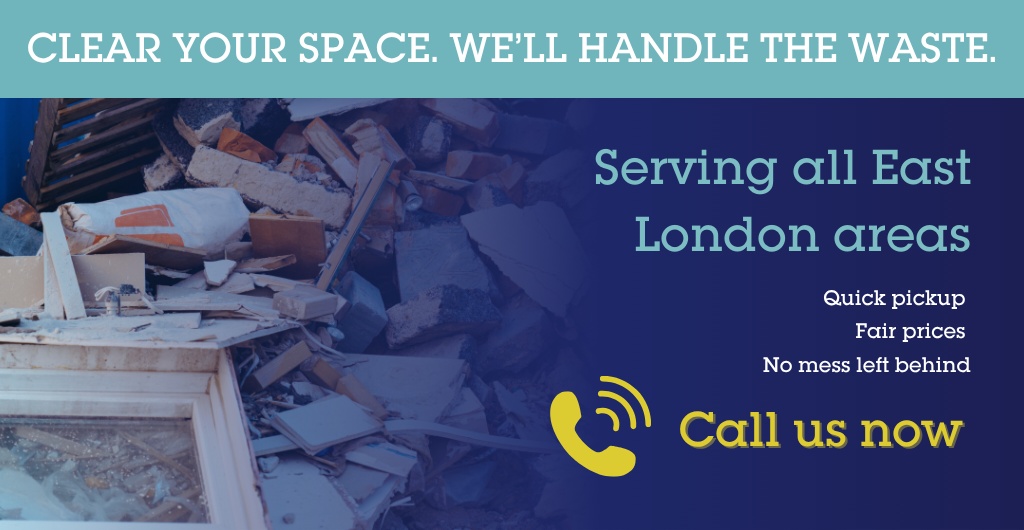
Waste Removal East London provides builders waste removal for contractors, tradespeople, landlords, property managers and homeowners in Victoria Park. We collect accepted renovation and construction debris across E9, including rubble, timber, plasterboard, packaging and dismantled fixtures. Labour and loading are included within the agreed service, providing an alternative to arranging a skip.
Why choose Waste Removal East London?
Building and refurbishment projects can produce heavy, bulky or dusty waste that is difficult to transport safely. Our collection teams handle the lifting, loading and transfer of accepted materials, reducing the time your workforce or household spends moving debris.
Waste Removal East London operates as a licensed waste carrier. We use authorised waste facilities and provide a waste transfer note documenting how the collected materials entered the managed waste system.
Our service includes:
- Collection teams accustomed to heavy building materials
- Appropriate public-liability and goods-in-transit insurance
- Labour and loading within the agreed scope
- Collections from occupied homes, empty properties and working sites
- One-off clearances or staged collections during refurbishment
- Sorting for reuse or recycling where practical
- Clear discussion of access, volume and accepted materials
- An alternative to leaving a skip outside the property
Each request is assessed individually. Photographs, material details and accurate access information help us allocate a suitable vehicle and crew rather than provide a misleading fixed price without understanding the load.
Builders waste collection services
Our construction debris removal service can support anything from a small room refurbishment to a wider property clearance. We collect bagged, bundled or loose materials where loading conditions and access are safe.
Typical collections include:
- Rubble and hardcore: Bagged bricks, concrete, mortar, blocks and broken tiles
- Kitchen and bathroom refit waste: Dismantled units, worktops, sanitaryware, tiles and non-hazardous offcuts
- Plasterboard: Separated plasterboard and gypsum-based materials requiring appropriate processing
- Timber: Floorboards, battens, doors, frames, sheet timber and manageable wood sections
- Packaging: Cardboard, plastic wrapping, pallets and protective delivery materials
- Fixtures and fittings: Dismantled cupboards, shelving and suitable internal or bathroom fittings
- Metal: Pipes, radiators, frames and other non-hazardous metal items
- Flooring: Lifted laminate, carpet, underlay, tiles and manageable flooring sections
- Builder bags: Filled bags and loose debris, subject to safe lifting and vehicle capacity
- End-of-project waste: Accepted materials left after repairs, refurbishment or fitting work
Plasterboard, wood and rubble can form part of one booking, although some materials may need to remain separate. For projects involving suitable mixed household or commercial contents, see our general waste removal service.
Materials requiring specialist handling
We do not undertake demolition, excavation, structural alteration or building work. Waste must already be dismantled and in a condition that the team can move without avoidable risk or property damage.
Hazardous or controlled materials cannot be added to a standard builders waste load. Examples include:
- Suspected or confirmed asbestos
- Chemicals, solvents and unidentified liquids
- Certain paints, adhesives and sealants
- Gas cylinders or pressurised containers
- Clinical or contaminated waste
- Fuel, oils and flammable substances
- Specialist insulation or fire-damaged materials
- Soil or other materials suspected of contamination
Identify unusual materials before booking. We can explain whether they fall within our licence scope or require an appropriately authorised specialist.
Large quantities of soil, concrete, bricks, tiles or hardcore need a bespoke assessment because vehicle payload limits must be observed. Builder bags must not be overloaded, and unusually heavy items may require mechanical lifting. Restricted sites, sharp fixings, upper-floor collections, long carrying distances and permit requirements should also be disclosed in advance.
How the collection works
1. Describe the waste
Provide an itemised description, estimated volume and photographs. Images are particularly useful for builder bags, rubble, hardcore, mixed renovation debris and loose site waste.
2. Explain the access
Tell us about stairs, lifts, gates, shared entrances, loading bays, parking restrictions and the distance from the waste to the vehicle. Confirm whether materials are bagged, loose, dismantled or spread between rooms.
3. Receive a tailored quotation
We assess the likely volume, weight, labour and access requirements before confirming the proposed charge. If the waste differs significantly when the team arrives, any revised cost will be discussed before additional work proceeds.
4. Arrange collection
A collection window is agreed according to route and crew availability. Urgent or same-day dispatch may be possible but cannot be promised. Further details are available on our same-day waste removal page.
5. Loading and immediate tidy
The team loads the accepted materials, provided they can be moved safely and match the agreed scope. Heavy-material loading is included in the quoted clearance.
Afterwards, the immediate collection area is left reasonably tidy. This does not include professional cleaning or construction finishing, although loose debris caused by the collection will be addressed where practical.
6. Transfer and documentation
The waste is taken to an authorised facility. We supply a waste transfer note for duty-of-care documentation and building-work records. Our waste collection process guide provides additional booking information.
Builders waste removal pricing
The quotation depends on more than visible volume. Dense rubble may reach a vehicle’s safe payload before filling its available space, while timber and packaging can occupy more room with a different loading requirement.
Relevant factors include:
- Waste type, volume and weight
- Amount of rubble, soil, concrete or hardcore
- Number and weight of builder bags
- Mixed or separated materials
- Labour and expected loading time
- Stairs, lifts and carrying distance
- Parking and loading restrictions
- Agreed dismantling requirements
- Collection frequency
- Specialist processing needs
A load-and-go service can be a practical skip hire alternative where there is no suitable container space or waste needs prompt removal. A skip may be more appropriate when a project generates materials continuously over a longer period. See our waste removal pricing guide or request an assessment using photographs and an itemised description.
Local collections in Victoria Park
Building waste collections in Victoria Park can involve narrow hallways, internal stairs, shared entrances, rear gardens and limited vehicle access. Commercial sites may also have security procedures, restricted working hours or designated loading bays.
Parking controls and busy roads across E9 can affect where the vehicle stops and how far materials must be carried. Provide these details when requesting a quote so that we can plan suitable resources for collection in Victoria Park.
Safety and compliance
Broken tiles, exposed nails, sharp metal and dense rubble require careful handling. Collections are planned around safe access, appropriate handling methods and lawful vehicle capacities.
Waste Removal East London:
- Operates as a licensed waste carrier
- Uses authorised transfer and treatment facilities
- Provides waste transfer notes
- Carries appropriate public-liability and goods-in-transit insurance
- Separates materials for reuse or recycling where practical
- Refuses or redirects waste outside the relevant licence scope
- Makes no unsupported claims about recycling percentages
Customers should keep carrying routes clear, separate plasterboard when requested and disclose hazardous or unusually heavy materials. Children, pets, residents and site workers should remain away from the immediate loading area.
FAQs
Must all rubble be bagged?
Bagging smaller rubble can improve handling, but bags must be strong and not overloaded. Loose rubble may be accepted where the material, access and loading conditions are suitable.
Can plasterboard be collected with other waste?
Yes, although it may need to remain separate for appropriate processing. Tell us the quantity before collection.
Can you clear waste after a kitchen or bathroom refit?
Yes. Accepted materials include dismantled units, worktops, sanitaryware, timber, tiles, packaging and rubble, provided hazardous items are identified and excluded.
Can you collect from an upper floor or rear garden?
Usually, subject to safe access and an accurate quotation. Disclose stairs, lift restrictions, narrow passages and carrying distances when booking.
Do you collect asbestos or chemicals?
Not through a standard builders waste collection. Suspected asbestos, chemicals and other hazardous materials need assessment and may require an appropriately authorised specialist.
Request a builders waste collection
Send Waste Removal East London photographs, an itemised description and access details for a tailored, no-obligation quotation.
Call 020 4572 5130 or email info@waste-removal-east-london.co.uk to discuss builders waste removal in Victoria Park.
